In the summer of 2008, Lehman Brothers published a balance sheet.
It was, by every official measure, a serious document. Six hundred and thirty-nine billion dollars of assets, attested by one of the most prestigious accounting firms on Earth, blessed by regulators, carrying an investment-grade rating from every agency that mattered — a rating some of them maintained until the week the firm died. What the document did not mention was a maneuver the firm’s own staff called Repo 105: a trick of timing that moved roughly fifty billion dollars of exposure off the books for a few days at the end of each quarter — just long enough to be photographed looking healthy — and then quietly took it back.
Fifty billion dollars, materializing and dematerializing on schedule, inside the audited accounts of one of the most scrutinized companies in the world. Nobody outside could see it. Nobody outside was allowed to see it. The world’s most sophisticated investors — pension funds, insurers, other banks — held claims on Lehman for one reason: they took the firm’s word, and the auditor’s word, and the rating agencies’ word, for what was inside.
On September 15, 2008, the words ran out. And here is the detail worth carrying into this chapter: the courts and accountants who then spent years untangling what Lehman actually owned and owed were performing, at a cost of billions, the one service the financial system had supposedly been performing all along — telling the truth about a ledger.
Look past the marble columns and the apps, and every financial institution you have ever used sells the same product. Not money — trust.
A bank is a promise that your deposits are really there. A broker is a promise that the shares in your account are really yours. A clearinghouse is a promise that the stranger on the other side of your trade will actually deliver. An escrow agent is a promise that neither party can run off with the house money. Title companies, custodians, transfer agents, correspondent banks — strip the letterhead and each one is a professional believer: an entity paid, handsomely and forever, to stand between two strangers and vouch.
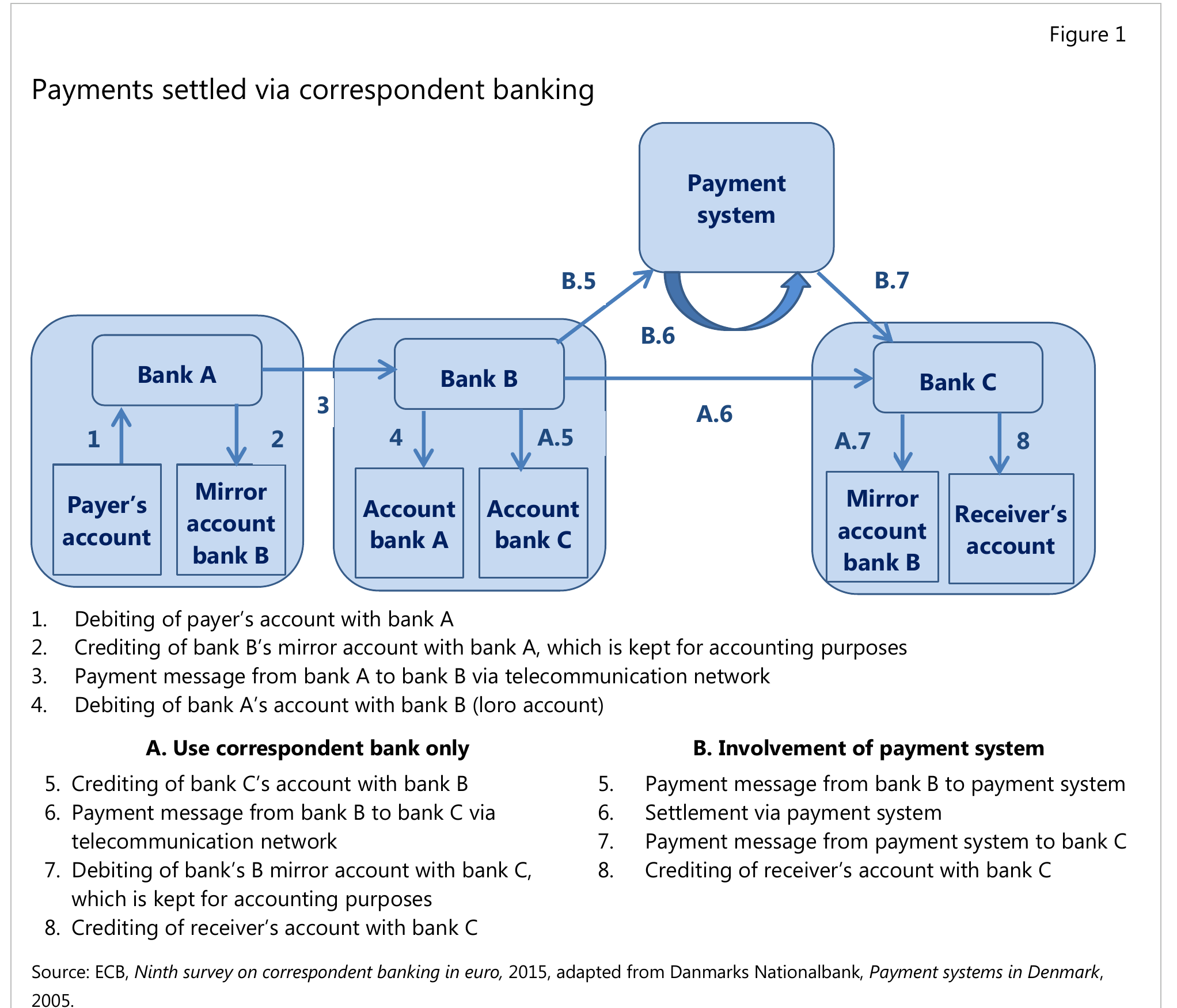
You pay for this the way you pay for anything embedded in a price — invisibly. The spread, the fee, the float, the three business days. Send a wire on Friday afternoon and the money arrives Tuesday or Wednesday; it isn’t traveling anywhere — there’s no truck. The dollars sit still while a chain of intermediaries checks entries against each other’s private books, each vouching to the next, business hours only, weekends off. The delay is the product. You are watching trust being manufactured, one confirmation at a time.
Most of the time the arrangement works, which is why nobody thinks about it. Part I showed what happens when it doesn’t. 2008 was not, at its root, a housing crisis — houses don’t freeze payrolls. It was a trust crisis: the moment every professional believer stopped believing every other one, simultaneously, because all of them had seen Lehman’s audited balance sheet and all of them knew what audits were worth. The system didn’t run out of money. It ran out of the willingness to take anyone’s word — and that willingness was the load-bearing wall of the whole structure, so the structure came down until a government put its own word underneath it.
Sixteen weeks later, someone carved a bank-bailout headline into the first block of a new ledger. That timing was not a coincidence, and it’s the reason this chapter follows the last one. Bitcoin’s design solves exactly one instance of the trust problem: it makes a money no one has to be trusted to issue. But money is only the first thing finance does. The lending, the trading, the clearing, the escrow — the entire trust-selling apparatus that failed in 2008 — still ran on ledgers you had to take someone’s word for.
The obvious question, to a certain kind of engineer, was: why stop at money?
In 2015, a group of programmers launched Ethereum — a network first sketched two years earlier, in a white paper written by a Russian-Canadian teenager named Vitalik Buterin — built on one generalization: if a network of computers can enforce the rule “twenty-one million coins, no exceptions,” it can enforce any rule you can write down precisely. Not just “this coin moved from A to B,” but “if the payment arrives by Friday, release the asset; otherwise return it” — rules with an if in them. Agreements that execute themselves.
The name for these is smart contracts, which is unfortunate, because they are neither smart nor contracts in the legal sense. A better description: vending machines for financial agreements. A vending machine is an agreement — money in, snack out — enforced by a mechanism instead of a person. It doesn’t know you, doesn’t check your credit, can’t be sweet-talked, and doesn’t call a manager. The deal executes because the machine physically cannot do anything else. Ethereum made it possible to build vending machines for lending, trading, settlement, escrow — and to bolt them onto a public ledger with no owner, so that no company controls the machine and anyone can read its gears.
Out of that came what the industry calls decentralized finance — DeFi — and the fastest way to see the point is to walk through what it replaces.
The wire. On the new rails, sending value — a hundred dollars or a hundred million — is one entry on the shared ledger. It settles in seconds to minutes, any hour, any day, Christmas included, for a fee unrelated to the amount. No chain of correspondent banks checking each other’s private books; there is only one book, and both parties can see it. The three-day wire and the instant transfer are not different speeds of the same thing. One is trust being manufactured. The other is trust being unnecessary.
The loan. The largest lending protocols hold tens of billions of dollars in deposits and have never met a borrower. No application, no committee, no loan officer’s judgment: you post collateral — more than you borrow — and the vending machine lends against it, at a rate set by supply and demand, updated continuously. If your collateral falls too far, the machine sells it and makes the depositors whole, automatically, in seconds, with no workout negotiation and no lawyer. It is a narrower kind of lending than a bank does — collateral math can’t fund a restaurant on the owner’s character. But notice what it cannot do: it cannot lend out reserves it doesn’t have, cannot hide its book, cannot need a bailout on Sunday night. Every loan, every deposit, every liquidation is on the public ledger as it happens.
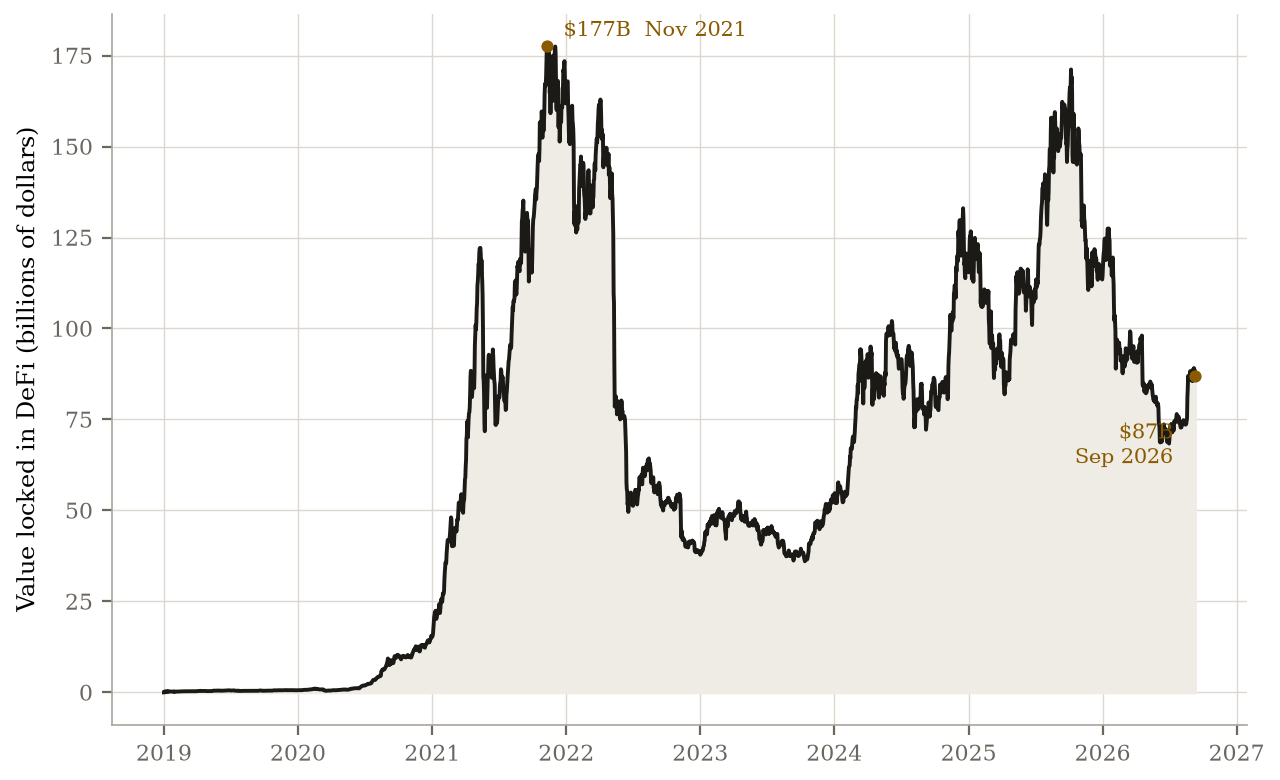
The audit. This is the one that should raise the hair on your arms, given where this chapter started. The reserves of a major DeFi protocol can be verified by anyone, in real time, from a laptop, to the penny. Not quarterly, not through an accounting firm’s attestation, not minus whatever moved off-book for the photograph — now, continuously, cryptographically. The phrase Lehman made necessary — “take their word for it” — does not apply, because there is no word to take. There is only the ledger. Repo 105 is not merely forbidden on these rails. It is unexpressible.
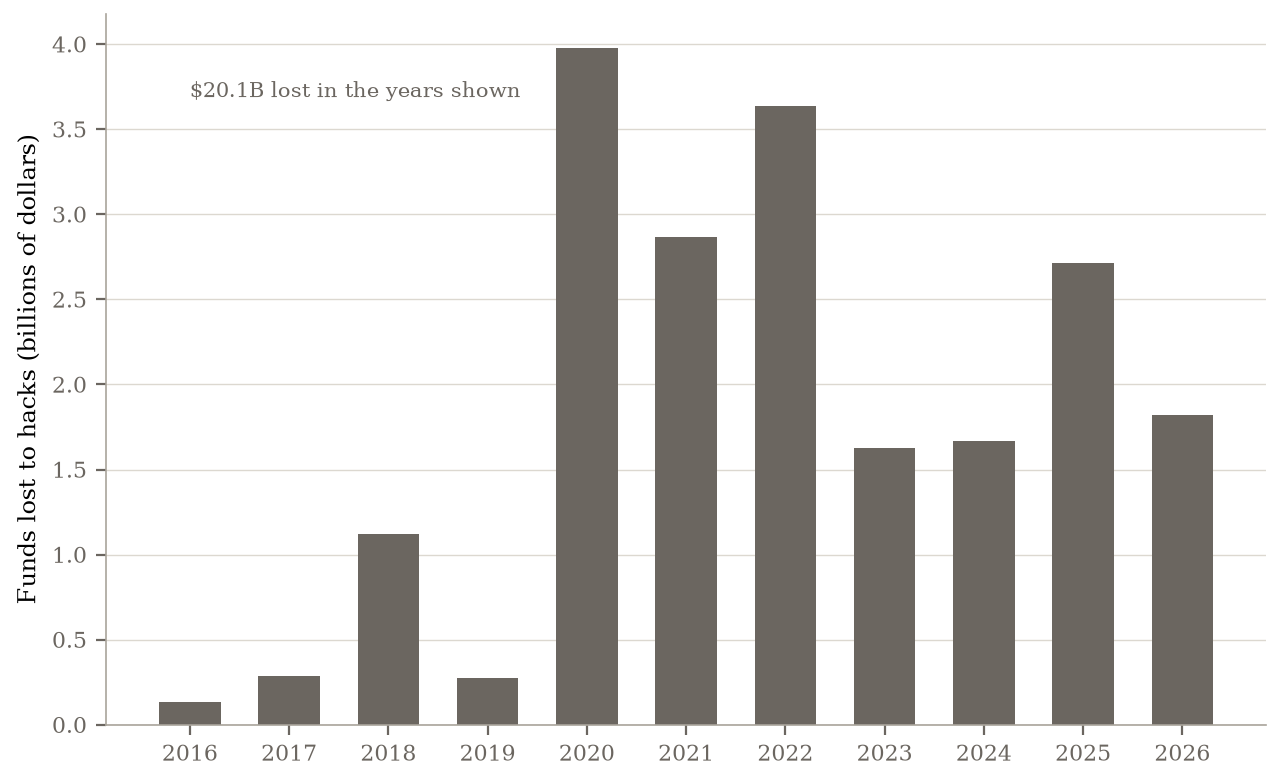
Be honest about the frontier, because it is rough and a reader who discovers that later will rightly distrust everything else here. Code enforces agreements exactly as written — including the badly written ones. Billions have been lost to smart-contract bugs and exploits, which is the trust problem reappearing in a new costume: you must trust the authors of the code, at least until it has survived years of attack. The difference is the direction of travel. A flawed contract, once found, is fixed in public, and the fix is inspectable; a flawed institution, as Part I documented at length, is bailed out and enlarged. One system’s failures burn the people who chose to stand near an experiment. The other’s failures compound into the machine this book is about.
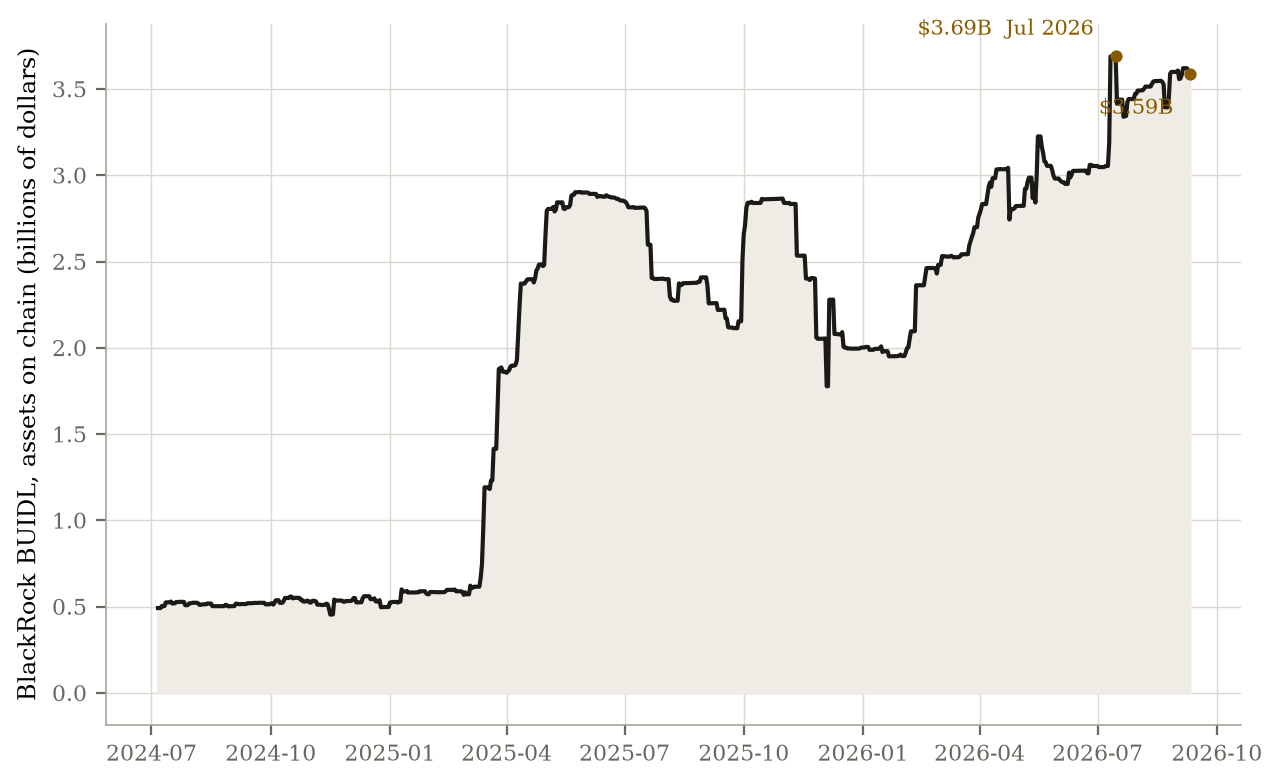
And the incumbents have stopped pretending otherwise. The world’s largest asset manager runs a tokenized Treasury fund on these rails; the largest American bank, whose chief executive once called Bitcoin a fraud, operates its own blockchain settlement network; the industry’s filings now speak, in Larry Fink’s words, of the tokenization of every stock and bond. When the trust sellers start building the trustless rails themselves, they are telling you what their own product is worth.
Which brings us to the second asset in this book’s subtitle, and one page — promised, no jargon — on why it belongs there.
Ethereum’s network runs on its own asset, ether, and the design ties the asset to the activity in three plain ways. First, every transaction pays a toll, priced in ether. Every trade, loan, transfer, and tokenized Treasury moving across the rails buys a little block space, the way every barrel on a pipeline pays the pipeline. More activity, more demand for the asset — not as a slogan, as a fee schedule. Second, ether is the security deposit. The computers that maintain the ledger must lock up ether as a bond — more than forty million coins are posted this way, roughly a third of all the ether there is — forfeit if they cheat, earning a yield if they serve honestly. The asset isn’t a ticket to the casino; it’s the collateral that keeps the casino honest, and it gets locked away in proportion to how much value the network secures. Third, part of every toll is burned — destroyed, permanently, by the protocol itself. In busy periods, the network has destroyed ether faster than it created it. Usage doesn’t just reward the asset’s holders. It shrinks the supply.
Hold the two assets side by side, because the distinction organizes everything in Part III. Bitcoin is a monetary asset: it does one thing — absolute scarcity — and its refusal to do anything else is its security. Ether is a productive asset: a claim on the activity of a financial system being rebuilt without trust sellers, with tolls, bonds, and burns tying the claim to the traffic. One is the vault. The other is the toll road being laid, mile by mile, between the vaults. You are not being asked to choose; the portfolio logic comes later. You are being asked to see that neither one can be conjured by a committee — and that between them they cover both of money’s futures: the store of value, and the rails value moves on.
There is, however, something genuinely strange moving across those rails — and it’s the twist this book has been saving. Tally what the new trustless system actually does all day, and the biggest single product isn’t bitcoin, isn’t ether, isn’t anything exotic. By volume, the killer application of the machine built to escape the dollar system is — the dollar. Tens of trillions a year of it. Congress has noticed, and blessed it, and the strangest chapter in this book is about why that is neither an accident nor a defeat.
Bitcoin removes trust from money. DeFi removes trust from finance. You can’t print either.
[Charts for this chapter: (1) the trust stack — a wire transfer’s intermediary chain vs. a single shared-ledger entry, drawn as two paths; (2) DeFi total value locked, 2019–2026; (3) ETH issued vs. ETH burned since 2021 — the supply flatline/decline. Endnotes: Valukas examiner’s report (Repo 105); Ethereum white paper (Nov 2013, Buterin); Electric Capital / DeFiLlama for TVL and settlement figures; BlackRock BUIDL and JPMorgan Kinexys documentation; Fink 2025 annual letter on tokenization (“Every stock, every bond, every fund — every asset — can be tokenized”); EIP-1559 / ultrasound.money burn data — note burn ran net-negative 2022–early 2024, supply has grown modestly since Dencun, so keep the burn beat past-tense as drafted. Tone note: incumbent-adoption beat kept analytical, not triumphalist. All inline [VERIFY] tags resolved at fact-check pass 2026-07-26 — see VERIFICATION-partII.md.]